One of the more interesting things about the 2026 World Cup was that two teams played some of their best football after it was no longer possible to win the Cup.
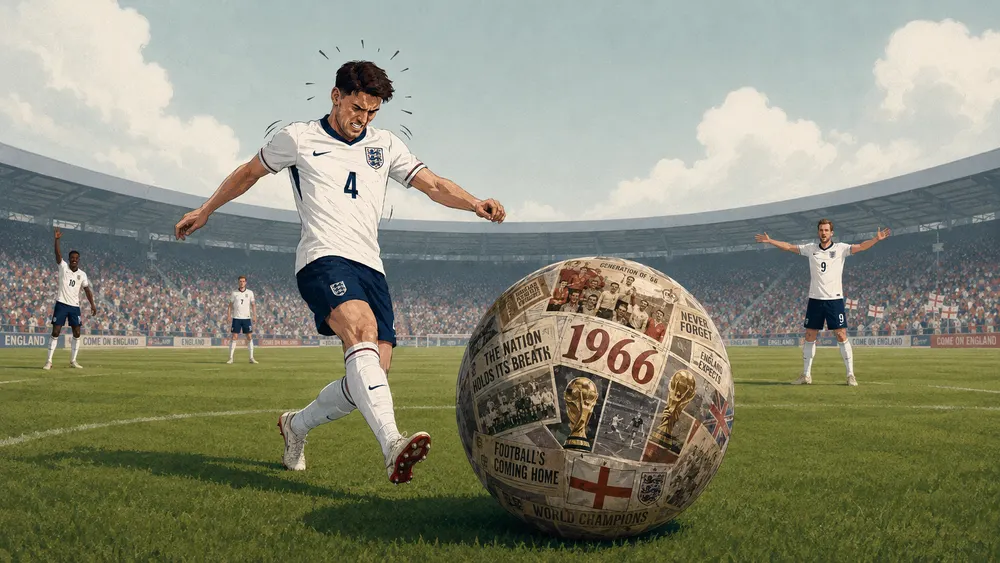
Against Argentina in the semi-final, England took the lead and then began behaving like someone carrying a Ming vase across a floor covered in ball bearings. The passing became cautious, the players retreated, and every decision seemed to require an internal legal opinion.
Against France in the bronze-medal match, the vase had already been smashed. England scored six. That means England scored just under a third of all the goals they scored in their highest-ever World Cup tally in that game. The side only scored 11 goals in the tournament they won in 1966.
Third-place playoffs are peculiar affairs, but the contrast is irresistible: England’s most liberated football arrived after the burden of consequence had been removed.
Some of the same phenomenon was evident in the final. Spain dominated possession and the shot count but struggled to turn control into a goal, even after Argentina were reduced to ten men at the end of normal time. Ferran Torres finally scored in the 106th minute, with Spain’s 20th attempt in a match they won 1–0. There were plenty of shots, but for long periods the pressure felt dutiful rather than dangerous.
This is sport’s central paradox, and one of its most beguiling, intriguing and consequential phenomena. It is also weirdly applicable to real life. The delicate balance between expectations and consequence and the mind-games involved in performance at the highest level are the things that makes sport matter; without it, football is merely cardio with branding. It's fascinating when that awareness of consequence can stop athletes doing what they normally do well.
We call this nervousness, but that makes it sound like a minor fault involving sweaty palms. In this context, nervousness is the collision between an ordinary action ... and everything that action might mean.
I often think the dread of watching the possible meltdown is one of the main things that keeps us glued to the screen - some people watch hockey until the first fight, or races until the first car crashes. There is a kind of unspoken fascination with possible disaster that floats like an unbidden ghost in the miasma over every big moment in sport.
When an athlete stops reacting to the ball and starts reacting to the future, players cease to merely to perform and instead watch themselves perform. Players become spectators in their own games.
The 2026 World Cup saw this phenomenon, I think, in its kindest form. England’s nervous semi-final became a celebration of confidence and cohesion in the bronze-medal game. It became a delightful consolation prize for a team that could easily have won, emphatically placing on record their actual prowess.
In a sense, you could say the same thing for France: although they lost, they still scored the number of goals that would usually secure a victory. And it did ensure Kylian Mbappe won the Golden Boot after scoring an astounding ten goals in just eight matches.
But that doesn’t negate the odd phenomenon of the mind-trick consequential contests play on their subjects - a mind-trick evident in everything from heady corporate negotiations to military strategy to something as simple as writing an essay.
The most cited example of this phenomenon, rather cruelly called “choking”, is the 1993 Wimbledon final, when Jana Novotná led Steffi Graf 4–1 and 40–30 in the deciding set. Victory had become visible. Novotná then lost the final five games and the championship, her aggressive tennis becoming increasingly tentative as the trophy drew nearer. She famously wept on the Duchess of Kent’s shoulder afterwards.
Novotná’s collapse became one of the most memorable popular illustrations of a phenomenon psychologists had already been studying for years. One of its foundational academic descriptions came from the American social psychologist Roy Baumeister, who defined “choking” - that horrible term - as a decline in performance when the importance of performing well increases.

Researchers have proposed two main mechanisms at work here.
The first is distraction. Worry consumes the attention needed to perform the task.
The second is explicit monitoring. A movement that has become automatic through years of practice is suddenly dragged back under conscious supervision. The golfer begins thinking about the position of his wrists. The tennis player considers the mechanics of the serve. The footballer who has struck a ball naturally since childhood starts providing himself with a live instructional podcast.
This is why telling an athlete not to be nervous is close to useless. It adds another task: in addition to winning the match, the athlete must now monitor whether he is sufficiently calm. The instruction “Don’t miss” is especially poisonous. It vividly introduces the miss into the athlete’s imagination while providing no information about what he should actually do.
The athlete recalls the previous mistake, imagines tomorrow’s headline and starts starts supervising himself. None of this tells him where to pass. The mind has barged into a process the body spent years learning to perform without assistance. It is like walking down a staircase while issuing detailed instructions to each knee.
This is the central argument of W Timothy Gallwey’s seminal book The Inner Game of Tennis, which is nominally about tennis but is actually about the calamity and inconvenience of having a human mind.
 W. Timothy Gallwey (Author), Pete Carroll (Foreword) Format: Paperback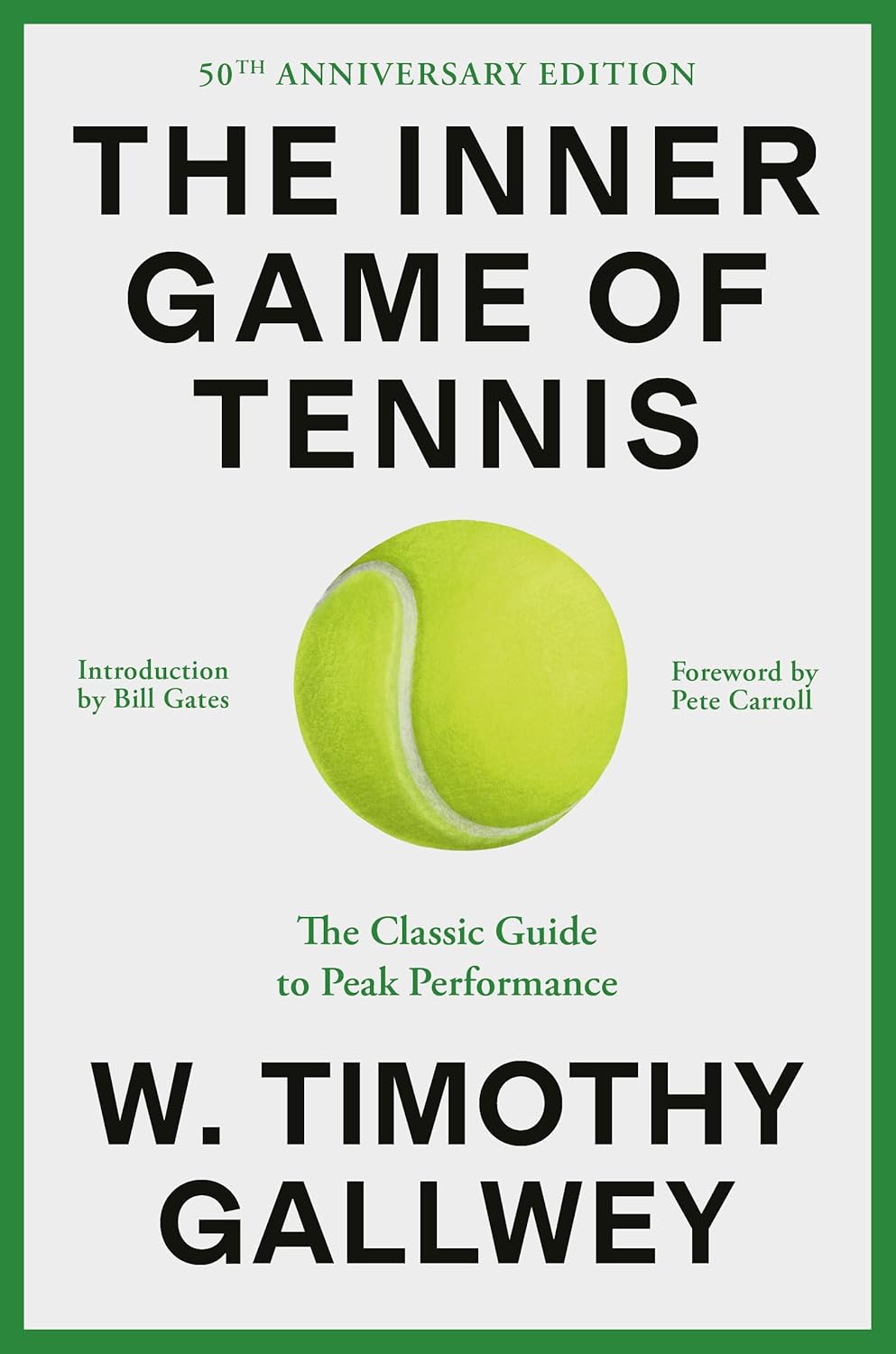
Gallwey divides the performer into two selves. Self 1 is the internal commentator: verbal, judgemental, impatient, and forever issuing instructions. Self 2 is the trained body, which generally knows what to do but is constantly being interrupted by Self 1.
Self 1 says: keep your eye on the ball.
Self 2 might reasonably respond: I have been doing that since primary school, thank you.
The more important the point is this: Self 1 attempts to help by increasing the volume and frequency of its instructions. The result is a kind of internal managerial takeover in which the department responsible for commentary seizes control of operations.
Another illustration of this same phenomenon in a totally different context was provided years ago by comedian John Cleese when he was tasked with talking about creativity. Weirdly, or possibly not, he reached much the same conclusion from the years of writing of comedy. One of the most fascinating things about creativity is that highly creative people are, on average, no more intelligent than ordinairly creative people. IQ might measure something, but what it definitively doesn't measure is creativity. How does that work?
In his lecture on creativity, Cleese distinguished between open and closed modes of thought. The closed mode is urgent and efficient. It is useful if National Treasury wants the documents by Friday.
Creativity, however, requires the open mode: curiosity, playfulness, experimentation, and a willingness to look foolish. One of Cleese’s crucial points was that nothing stops creativity as effectively as the fear of making a mistake.
So what do you do to combat this terrible state of being sensibly worried about performing badly? What is the solution here?
The writer David Foster Wallace put his finger on it in his essays on tennis. He was fascinated by the majestic banality of interviews with elite athletes. Asked what they were thinking during the most consequential moments of their lives, they would tend to say: one point at a time, trust the process, focus on the next ball.
Wallace speculated that this banality might be part of their greatness. The spectator sees history. The athlete sees the next ball.
This is why sporting clichés survive despite sounding as though they were drafted by a committee of refrigerator magnets. “The next ball” is not merely a cliché. It is a psychological weapon. It strips the present of the future.
A player should know - but sometime doesn't - that they cannot win the World Cup in this instant. That is not within their gift. But they can move into space, control the ball and make the next pass.
Nervousness does the opposite. It collapses the future into the present. This is one of the reasons why the stationary ball can be more terrifying than a moving one. In open play, the player reacts. At the penalty spot, he has time to think. He can shoot left. He can shoot right. He can become immortal. He can become a meme.
Great athletes do not necessarily eliminate fear. They prevent it from taking command. In that famous Wimbledon final, the focus during the game and afterwards was on Jana Novotná. But what about Steffi Graf? What was going through her mind? We cannot know, but the striking fact is that she just played her natural game, continuing to play the match in front of her rather than becoming overwhelmed by what the match had come to mean. It must have helped that she had already won the tournament twice at that point. Novotná saw the trophy; Graf kept seeing the ball.
This is one of the reasons why athletes use routines because routines make extraordinary occasions resemble ordinary ones. The ritual gives the body something familiar to do while history shouts from the grandstand. They also look outward, towards the target or opponent, rather than monitoring their own limbs.
Ultimately, composure is not the absence of consequence. It is the ability to prevent consequence from colonising the action.
Against Argentina, the future entered England’s game. Every pass became burdened with the possibility of reaching or losing the final.
Against France, the future had already been settled. England could no longer become world champions and so the players were permitted to become footballers again.
The great accomplishment in sport, and perhaps also in business, and also when being creative, is not to play freely when nothing is at stake. Almost everyone can manage that. It is to recover that freedom when everything appears to be at stake.
Forget about history. Just pass the ball, and that is a phenomenon which not surprisingly the winner of the tournament, Spain, did exceptionally well. 💥
From the department of the 66-million-year-old cold case...


From the department of the coming to your theatre this summer ...

From the department of the two-speed apocalypse...

Thanks for reading - please share if you have a friend (or enemy!) you think would value this blog and ask them to add their email in the block below - it's free for the time being. If the sign-up link doesn't appear, you'll find it on the site.
Till next time. 💥