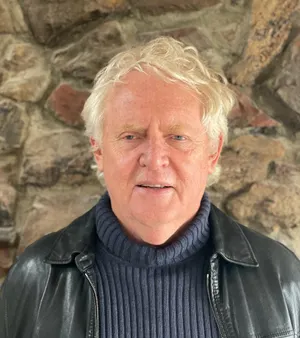

One of the odd things about getting older is that you begin to realise how much of your life is made up of other people. Not just family and close friends, but the people who happened to be in the room, at the table, in the town, and who somehow altered the atmosphere.
Some people are particularly good at this. They make a place more interesting simply by being in it. They set standards without appearing to set standards, which is probably the only tolerable way of doing it. You notice how they behave, how they treat people, what they laugh at, what they care about, and some small part of it sticks.
So perhaps paying tribute is not entirely about looking backwards. It is also a way of taking stock of the people who have quietly supplied us with examples. This missive is usually more concerned with larger issue of macro politics and economics, so forgive the slight change of register but would like to pay tribute a fabulous person who lived, and died last week, in my little desert town of Prince Albert.
Bokkie (not his real name but the name he was know as for basically his whole life) was in many ways one of the founding members of the newer version of Prince Albert, which was and is trying to transform itself from a farming town to a town rooted in agriculture, retail and tourism. Bokkie helped get this whole process going by starting a small restaurant called the Olive Branch, which went on to win a whole bunch of awards. But the attraction was never just the food. It was Bokkie: the grace, the jokes, the conversation, and an apparently inexhaustible supply of memories.
And there was a lot to remember. Bokkie’s life trajectory was remarkable even by South African standards. His professional life began as a music and English teacher at Pretoria Boys High School, and he was so remarkably talented at maintaining good relations between scholars and staff, he was eventually hired by explosives company AECI as group personnel manager. But that was just the start of his gift for finding common ground, even in the heady days of the very adversarial late-apartheid labour environment.
In 1988, he was promoted to the Federated Chamber of Industries’ Standing Committee on Manpower, and in that capacity became a prominent national spokesman for employers. He was deeply involved in negotiations over the new Labour Relations Act, which he described at the time as creating a statutory form of “democracy in the workplace”. His opposite numbers were all people who would go on to become prominent in the post-apartheid government and trade unions, including Mbhazima Shilowa, Jay Naidoo, Ebrahim Patel and one Cyril Ramaphosa.
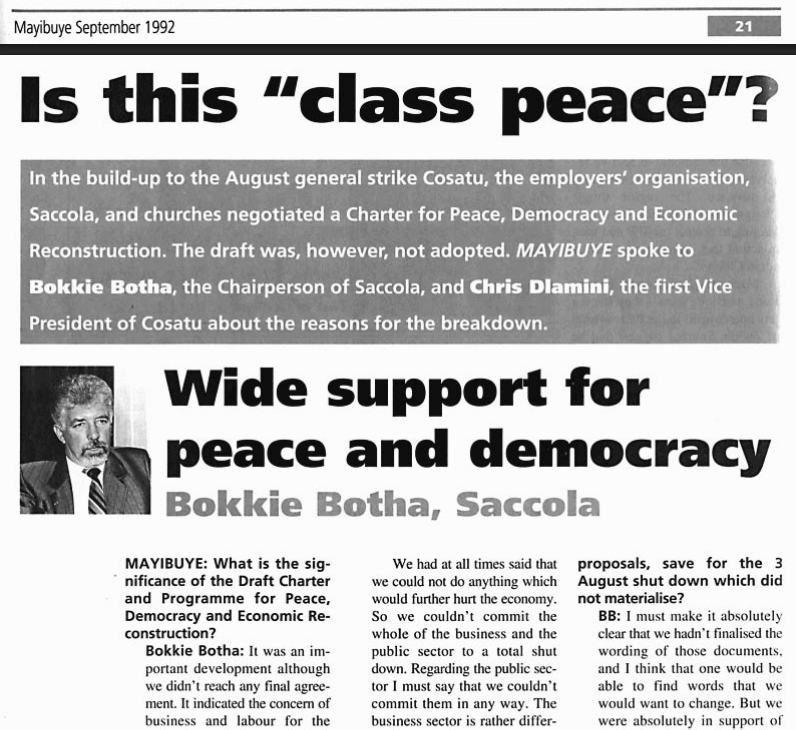
Effectively, Botha was part of the small group of employer and trade-union figures who created the machinery of post-apartheid social dialogue. Charles Nupen, one of South Africa's leading mediators, remembered Botha as a “senior employer representative” with progressive views on trade unions and social partnership. Botha sat on the Commission for Conciliation, Mediation and Arbitration (CCMA) governing body, and he and Nupen organised a remarkable study visit to Ireland, the Netherlands and the International Labour Organization (ILO) involving people such as Nicholas Oppenheimer, Shilowa, Patel, Leslie Boyd, Zwelinzima Vavi and Gwede Mantashe. The objective was to study how countries could use negotiated social compacts to overcome economic conflict.
He was so admired in this process he was appointed after the first democratic election to the ILO in Geneva representing employers; there he was jointly responsible for two major innovations: an ILO resolution on HIV/AIDS in the workplace, and perhaps even more significantly, he played a direct role in creating ILO Convention No. 182, Worst Forms of Child Labour, adopted in Geneva in June 1999. Botha was employer vice-chairperson of the ILO Committee on Child Labour, effectively the lead representative of international employers in the negotiations.
Convention 182 became a landmark piece of international labour law. It required countries to take urgent action against practices including child slavery and trafficking, forced recruitment of children for armed conflict, child prostitution and pornography, the use of children in drug trafficking, and hazardous work. Remarkably, the convention was adopted unanimously, the first ILO convention in the organisation's history to achieve unanimous adoption. Typical.
I remember him telling me that one of the things you could do if you were based in Geneva was nip over the border to France and eat in fancy restaurants, which he did a lot. It was while he was posted to Geneva that his interest in and love of cooking really flourished. So when his posting ended and he retired, he and his then-wife Mary-Anne moved to Prince Albert, where he established the Olive Branch.
The restaurant was in some ways, as the name suggests, an amalgam of his life’s work – on the one hand generating felicity, and on the other generating food. A table, I suspect, was probably his most valued symbol: a gathering point where conviviality tended to result in joy, friendship and agreement. But what an odd symbol it was: one foreign food writer phoned a nearby bed and breakfast to ask to make an appointment, planning to spend a lot of money visiting the town to review the restaurant. The BnB owner was obliged to inform him that in Prince Albert, it doesn’t work like that. A lot, you see, depended on whether Bokkie felt like cooking that weekend. The reviewer came anyway, and the Olive Branch became internationally renowned.
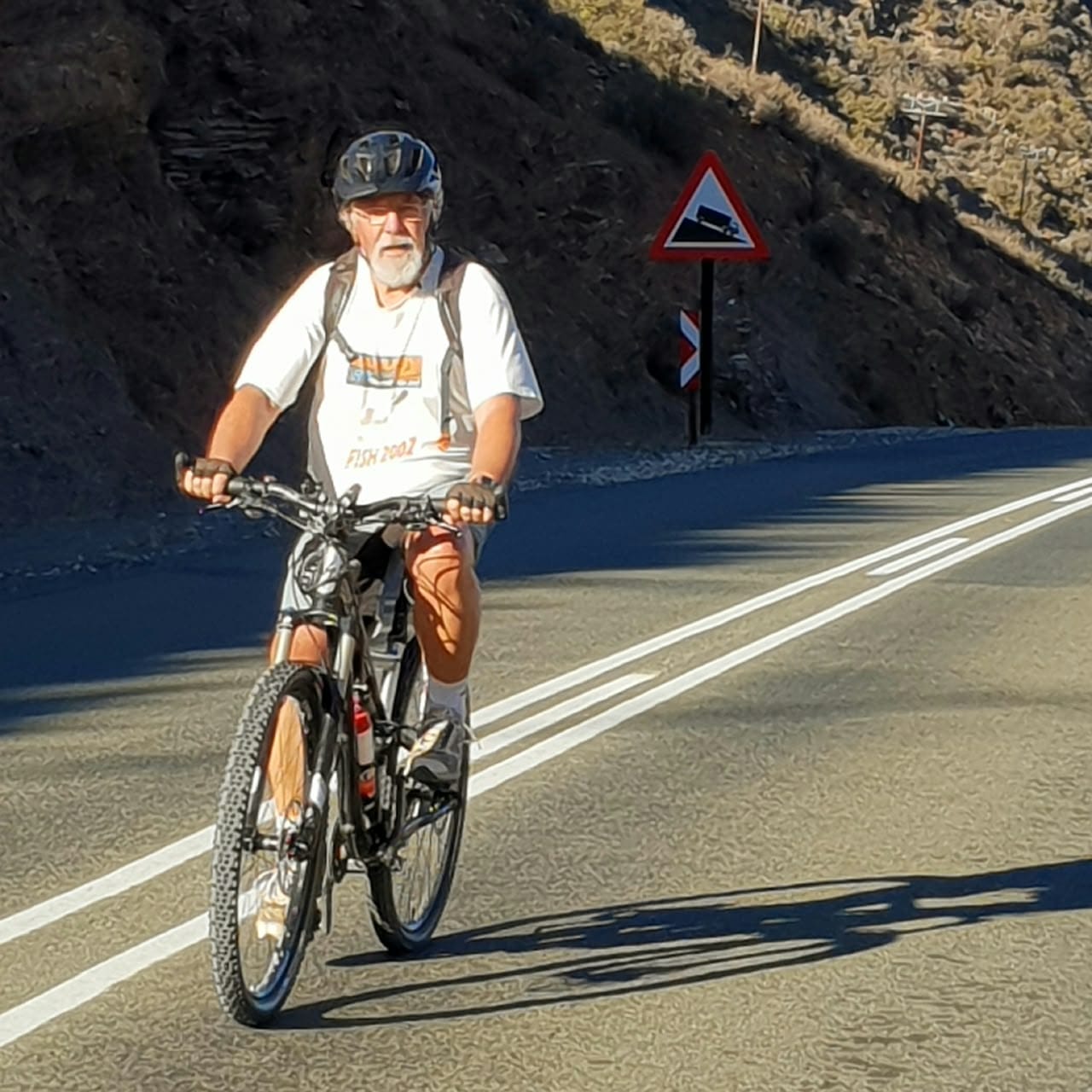
Bokkie continued his active physical life in the town, zipping up and down the Swartberg Pass on his bike (he also ran 13 Comrades Marathons and was a very keen canoeist) and mentoring other chefs, many of whom still run bakeries and restaurants in Prince Albert today. He was surreptitiously generous, paying the school and university fees of township kids in need, and was constantly available with wisdom and moral support. I’m proud to say I was a member of one of the book clubs he frequented, The NotTheBookClub Book Club, where participants were strictly required to read the labels on the wine bottles we brought along. In full.
He was so active and integral to the town’s life, his decline was painful to watch. But you know, we all get old. Bokkie held it together right till the end and died as he wanted, in his own bed.
More than just himself, he stands for a generation of farsighted, big-hearted, open-minded people who imbued the spirit of a new country where vast differences would and could be bridged, preferably over a table, with food and wine. Long may that spirit live.
The future, as Bokkie would have told us and did in fact show us, is not inevitable.💥
From the department of the slightly worrying ..
 Sawdah Bhaimiya
From the department of disappointed healthy people ...


From the department of low reading scores ..
 Jessica Esther Saraceni
Thanks for reading - please share if you have a friend (or enemy!) you think would value this blog and ask them to add their email in the block below - it's free for the time being. If the sign-up link doesn't appear, you'll find it on the site. And my book - based on these columns - has just been published, get it here!
Till next time. 💥