
I am going to invest in the SpaceX IPO, even though I strongly suspect I will lose money. I won’t invest much, not because of desire or intention, but because fortunately, luckily for me, I don’t have much spare moolah lying around.
This is not an investment thesis so much as a confession. SpaceX has all the usual symptoms of financial imprudence: an historic valuation, a celebrity founder, a gigantic story, a low probability of sober pricing, and a retail-investor queue stretching from here to the far side of Mars, where I imagine the first branch of Robinhood will open beside a small, tasteful statue of Elon Musk.
The company is reportedly aiming to raise about $75 billion at a valuation of roughly $1.75 trillion, which means the flotation is not merely large. It is obscenely, operatically, almost comically large. Previous IPO record holders now look less like landmarks than warm-up acts. Saudi Aramco, the previous giant of the genre, raised just under $30 billion in 2019.
This is what happens when capitalism gets bored with merely listing companies and decides to launch myths. In this case, the ticker is expected to be SPCX. One assumes “MARS” was unavailable, “ELON” too subtle, and “FOMO” already implied. The IPO also raises the usual Musk-era governance question: are investors buying into a company, or buying a seat in the upper gallery of the Elon Musk Theatre of Capital Allocation?
SpaceX also fails in terms of corporate organisational logic. It's an increasingly improbable compound creature - part rocket company, part satellite utility, part defence contractor, part broadband provider, part artificial-intelligence fantasy, part Mars prospectus, and now part public-market morality test.
But here is the thing: SpaceX has done something extraordinary. It has taken an industry once dominated by governments, contractors, and heroic waste, and made it faster, cheaper, and more commercially muscular. It has launched more, landed more, reused more rockets than anyone in history. In an implicit lesson to nation builders everywhere, it has generally behaved as if the aerospace industry had been moving at the speed of a municipal licensing department for 50 years. SpaceX is no longer just a rocket company. It‘s the world’s dominant launch provider, the operator of the largest satellite network ever built, and the Pentagon's primary access to orbit.
That is why the IPO is so fascinating. It is both a financial instrument and a psychological experiment. On one side sits the rational investor, muttering about valuation, lock-ups, execution risk, capital expenditure, AI losses, founder control and the regrettable tendency of IPOs to trade below their first-day lows. On the other side sits the human being, watching rockets land backwards on drone ships and thinking, “Wow, that’s impressive. If they can do that, what else can they do?”.
The Wall Street Journal recently reminded readers of a brutal little statistic from The Lifecycle Trade, by Eve Boboch, Kathy Donnelly, Eric Krull and Kurt Daill. More than 90% of IPOs eventually trade below their first-day low. That's not a footnote, it's is a crocodile in the swimming pool.
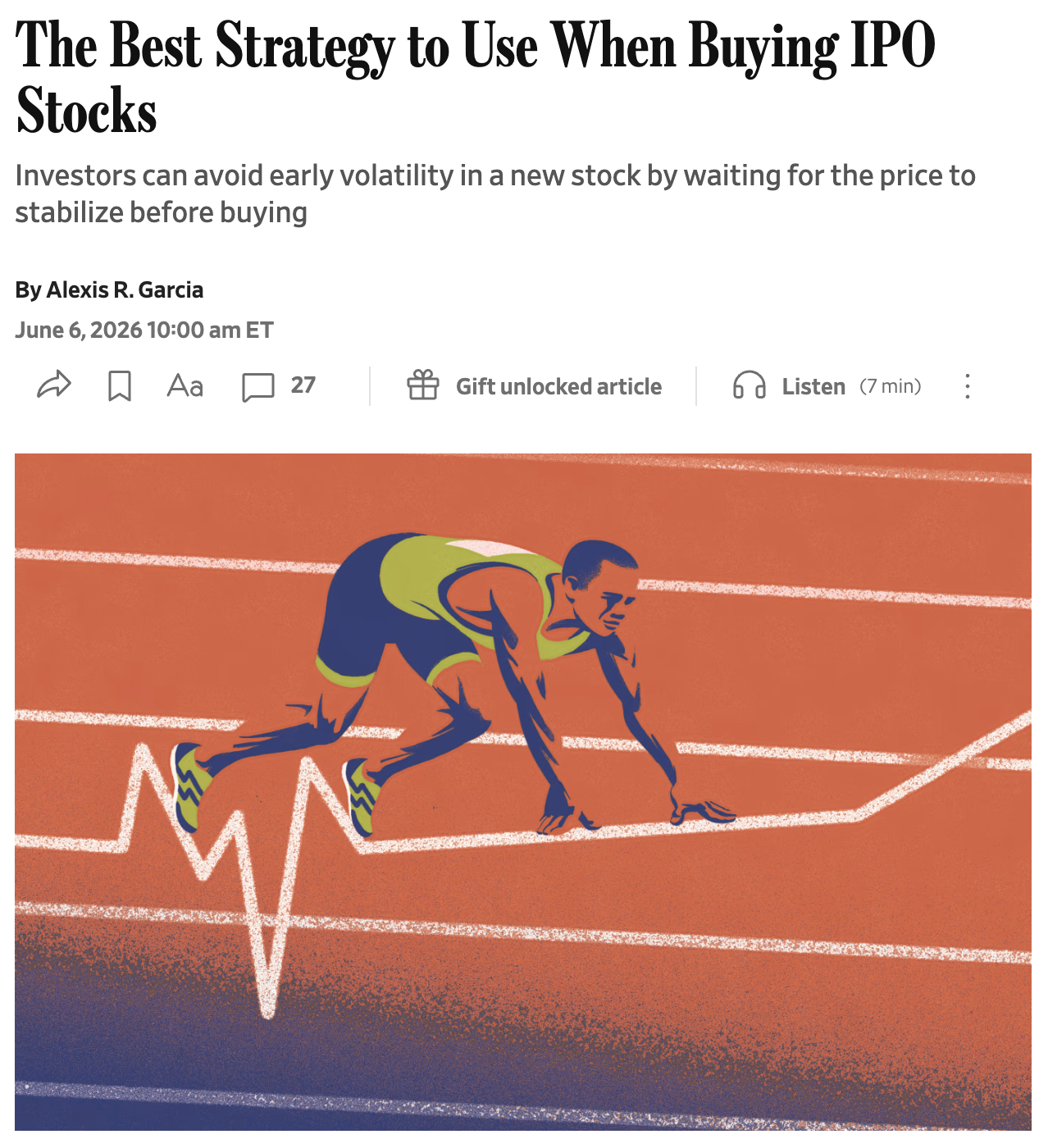
It does not mean every IPO is bad, or that the great companies do not eventually become great investments, but technical traders have a phrase for the wiser approach: wait for the IPO to form a price floor.
The concept is admirably simple. As a new stock lists, and the initial frenzy, it begins to settle into a narrower trading range. The early sellers exhaust themselves, and institutions begin to accumulate. Eventually a price floor forms.
This listing is showing all the signs of a frenzy, my guess is that you can see that in an odd place; Bitcoin. The Bitcoin price is down 30% year-to-date, and I suspect the reason is that Bitcoin owners are cashing in their coins in order to take a punt on the three big IPOs likely to take place this year: SpaceX, Anthropic, and OpenAI. And they are doing so because they are exactly the kind of investment bros who would desperately like to be in at the start (like me!). SpaceX has reportedly earmarked as much as 30% of the deal, or $22.5bn, for retail investors — very unusual for an IPO of this scale. Musk is not merely selling shares; he is dropping the velvet rope to the fan club.
Historically, Google provided a great example of how to solidify your investor platform in 2004. It listed, settled, dipped only modestly, then broke out on volume and ran hard. Spotify, by contrast, provided the cautionary sermon. It looked promising, did not attract enough institutional buying, and then spent years reminding investors that being culturally beloved is not the same as being technically buyable.
So the rational move is obvious: don't buy the SpaceX IPO on day one. Wait. Watch. Let the base form. Make SpaceX prove that it is not merely a spectacle with a ticker symbol.
I know this. But I’m just going to ignore it. Why?
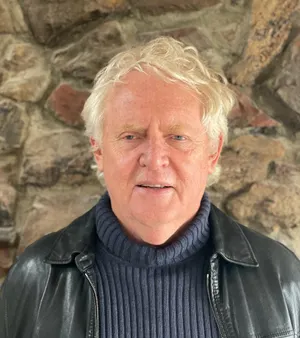
Partly because I’m so charmed by a recent substack by Kevin Kelly, the founding executive editor of Wired magazine and a former editor and publisher of the Whole Earth Review. Recently he wrote, your life’s goal should be to become the most improbable person you can be. “Your path, your character, your life, should be the most unlikely, the most unexpected, the least predictable version you can make,” he wrote recently.
 Kevin Kelly
“Every year we collectively make it easier and easier to make something new that the universe has never seen before. Not just on Earth, but in the universe. We are complex enough that our life will never be repeated, nor anticipated, on any planet in any galaxy in any part of the universe.
"No matter what you do, the sum of your life is unique and unrepeatable. But it can be even more improbable. You can align yourself with this grand arc moving from the expected to the unexpected and aim to become the most improbable person you can be.
"Here is what you gain with your most improbable life: The authentic you. Your particular mix of talents, native abilities, personal inclinations, genetic limits, life experiences, and ambitious desires points to a mixture that is distinctly unique – if it is allowed to blossom. The further you move in that direction, the more you-like you become,” he wrote. Fabulous!
Isn’t that just totally the story of SpaceX? It's a bit like the Infinite Improbability Drive which is one of Douglas Adams’s great comic inventions in The Hitchhiker’s Guide to the Galaxy - a spaceship engine that does not travel through space in the boring conventional way, by thrust, navigation, fuel and all that dreary Newtonian administration, but by making the wildly unlikely happen.
In investment terms, my version is this: take responsibility for your innate hard-wired conservatism. We all have a hidebound instinct not just as a financial strategy, but as a biological inheritance. We are descendants of the people who heard a rustle in the bush and assumed leopard, not opportunity. Pessimism is not stupidity. It is ancient risk management. The optimists got eaten often enough for the rest of us to inherit a nervous system with a permanent short position on the future.
But the problem with inherited pessimism is that it often keeps working long after the leopard has moved off. You should let that stop you from doing idiotic things, but not from doing every unlikely thing because the unlikely things are very often where life has hidden its best returns.
Everybody knows this, though sometimes I think we pretend not to. Choosing a life partner is, from a purely actuarial perspective, insane. You meet another person, usually under conditions of poor information, chemical exaggeration and wild optimism, and decide to merge futures, families, finances, furniture, and remote-control preferences. It is absurd. It is also, for many people, the best decision they ever make. I know. I did exactly that and miraculously it turned out fabulously.
Careers are not much better. Most of us did not arrive at our professions by the clean application of a spreadsheet. We drifted, bluffed, fell sideways, accepted one job because another did not call back, met someone in a corridor, wrote something by accident, discovered a competence we did not know we had, or developed a taste for a field we once thought belonged to other people. A life, when told honestly, is less a five-year plan than a series of improvised escapes from the person one used to be.
Investing is where we are meant to be disciplined, and diversify, and avoid fees, and not confuse narrative with value. You should obviously invoke the improbability drive less in investing than in other parts of your life. But should you jettison it altogeather?
A SpaceX investment may lose money in the short term (and the long term!), but I also think that a life governed entirely by the fear of losing money becomes very small very quickly. The best things I have done have, at the time, often looked statistically suspect. Love. Work. Moves. Friendships. Choices made before the evidence was complete, which is to say, almost all choices that matter.
There is no sense in being reckless, but I will actively manage my pessimism. And I will probably mutter darkly when the stock falls below its first-day low, as history suggests it very well might.
And then, with quaint worldliness of a man who has read all the warnings and ignored just enough of them to remain more or less physically active, I will own my tiny, possibly overpriced piece of the improbable. 💥
From the department of always knowing that the weather is a painting ...
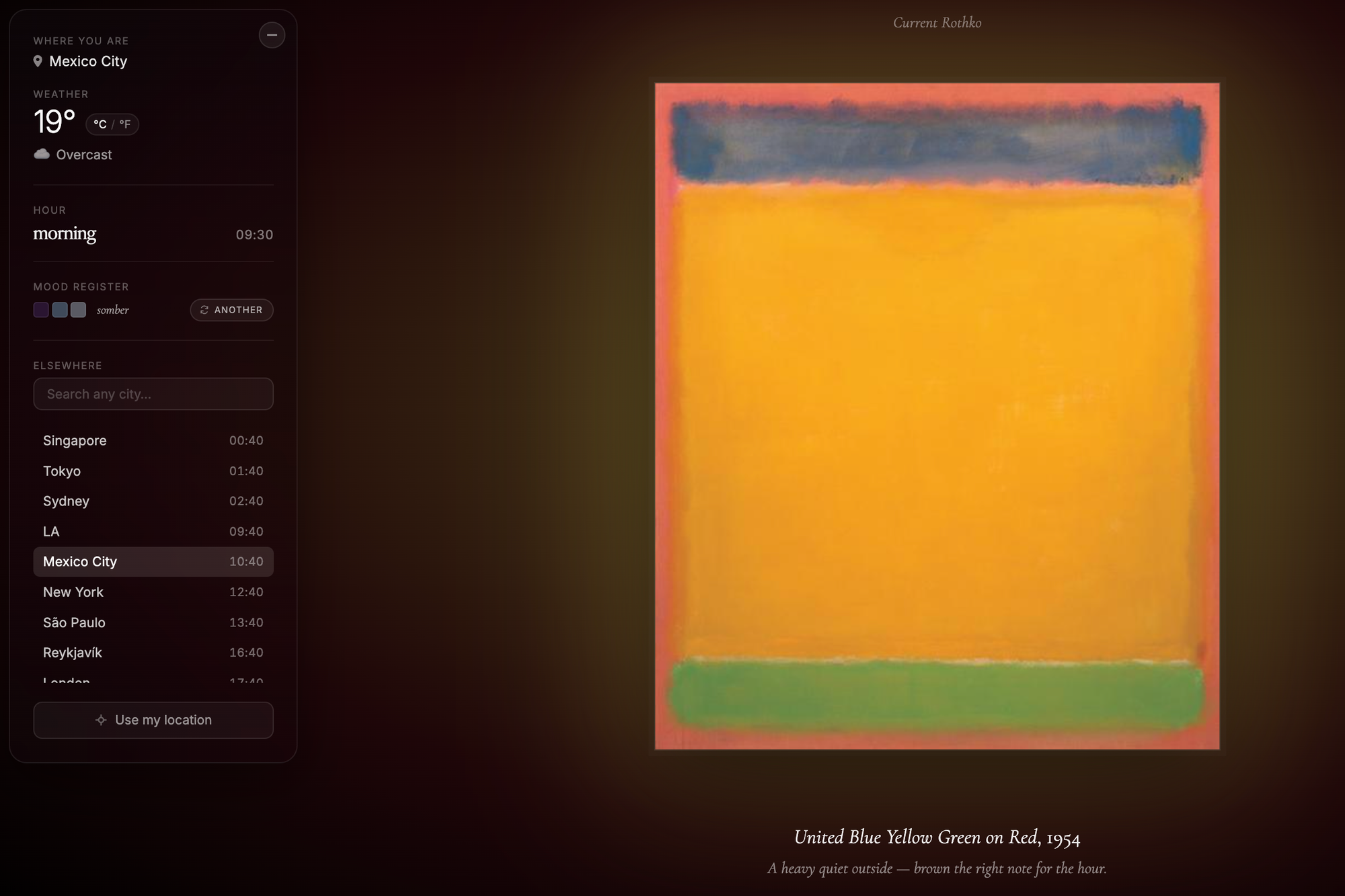
From the department what exactly are the other third doing? ...

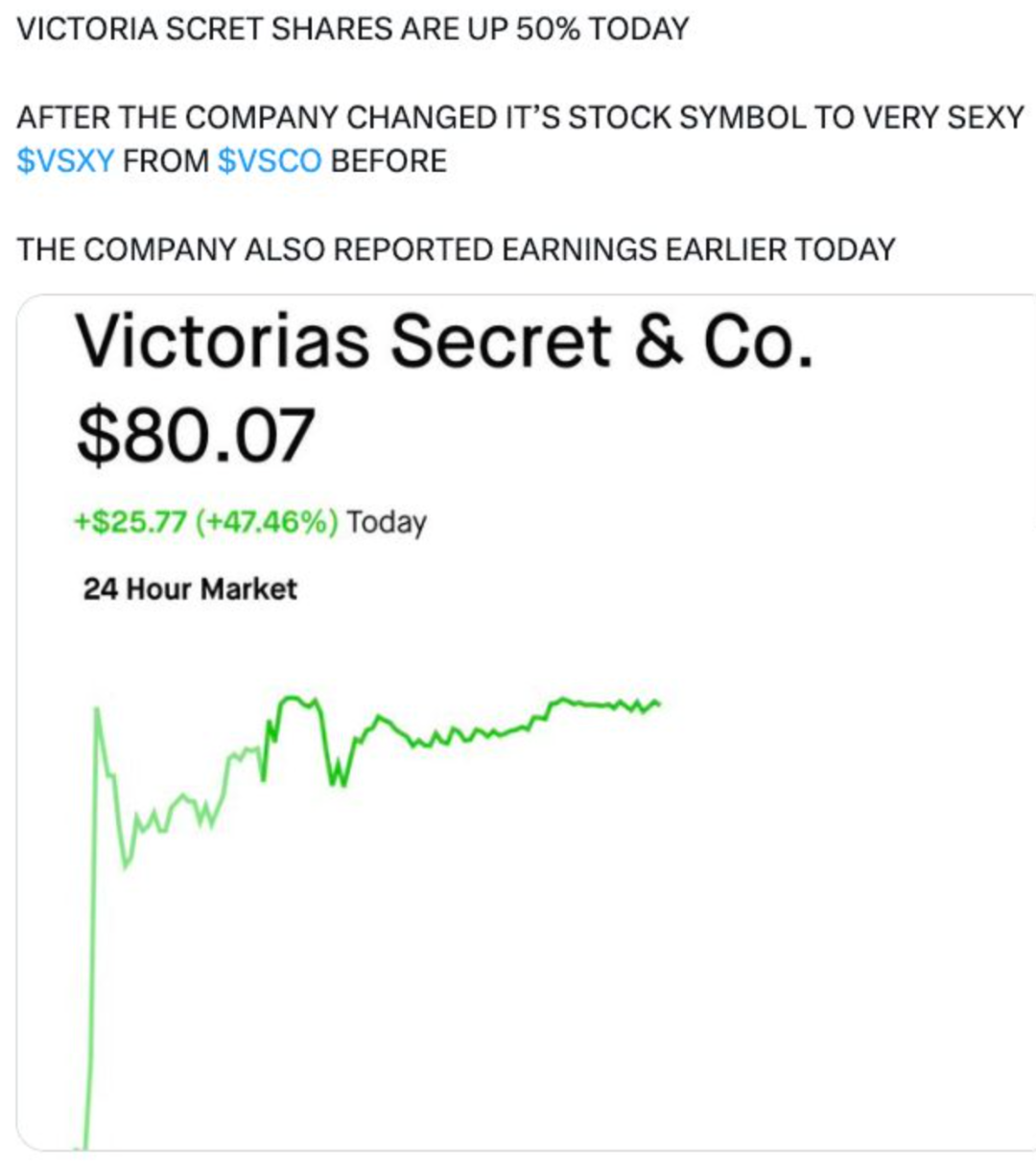
From the department of v.sxy ticker changes do sell. Shocker...
Thanks for reading - please share if you have a friend (or enemy!) you think would value this blog and ask them to add their email in the block below - it's free for the time being. If the sign-up link doesn't appear, you'll find it on the site.
Till next time. 💥